

Mindset & Menopause ~ When Change Feels Like Chaos
part 2: decoding symptoms..free download!


Most every night feels like an epic adventure. Tossing and turning, vivid dreams, and waking up several times, completely soaked through. I toss off the blankets and sigh in relief as the cool bedroom air brings me back to homeostasis ahhhh, then what? I start shivering; gosh, it’s freezing! Where are those blankets (that I just kicked off)?? Anyone else? This is just one of the lovely things that perimenopause brings; lucky us!
So what causes all of this tomfoolery? Ugh, the dreaded hormones! And though there are many important ones through this process, estrogen is the main culprit, and she starts a snowball effect.
During perimenopause, the decline in estrogen, a hormone that helps regulate cortisol, can disrupt the body’s ability to manage stress. Higher cortisol, sometimes referred to as “the stress hormone,” can lead to fatigue, anxiety, weight gain, insomnia and brain fog.1
In conjunction with our decline in estrogen, cortisol plays an important role. We all experience stress in the day-to-day and have hormones that help us cope with it. Our other hormones become dysregulated as part of the decline in estrogen. So the added stress and uncertainty that come with our changing bodies can activate our fight-or-flight response. First, adrenaline is released, which increases our heart rate and blood pressure for a burst of energy to manage the perceived danger. Then the cortisol comes in by boosting blood sugar, preparing us to sustain a response.

If you are having cortisol and adrenaline surges as a result of stress—-and anybody alive experiences stress—on top of estrogen and progetersone glitches during Transition, this can be experienced as a powerful emotional meltdown and/or an intensification of hot flashes. Combine an estrogen drop with life stress, great or small, and you have confusion, destabilized mood, sleep problems, and memory problems. ~Louanne Brizendine, MD
I can tell you there is no right or wrong to how we each experience perimenopause, menopause, and post menopause. Each experience is valid and individual. However, there is a wide range of symptoms that we can all experience, which you may not even know are part of it! Here is a breakdown of some of what you may experience.
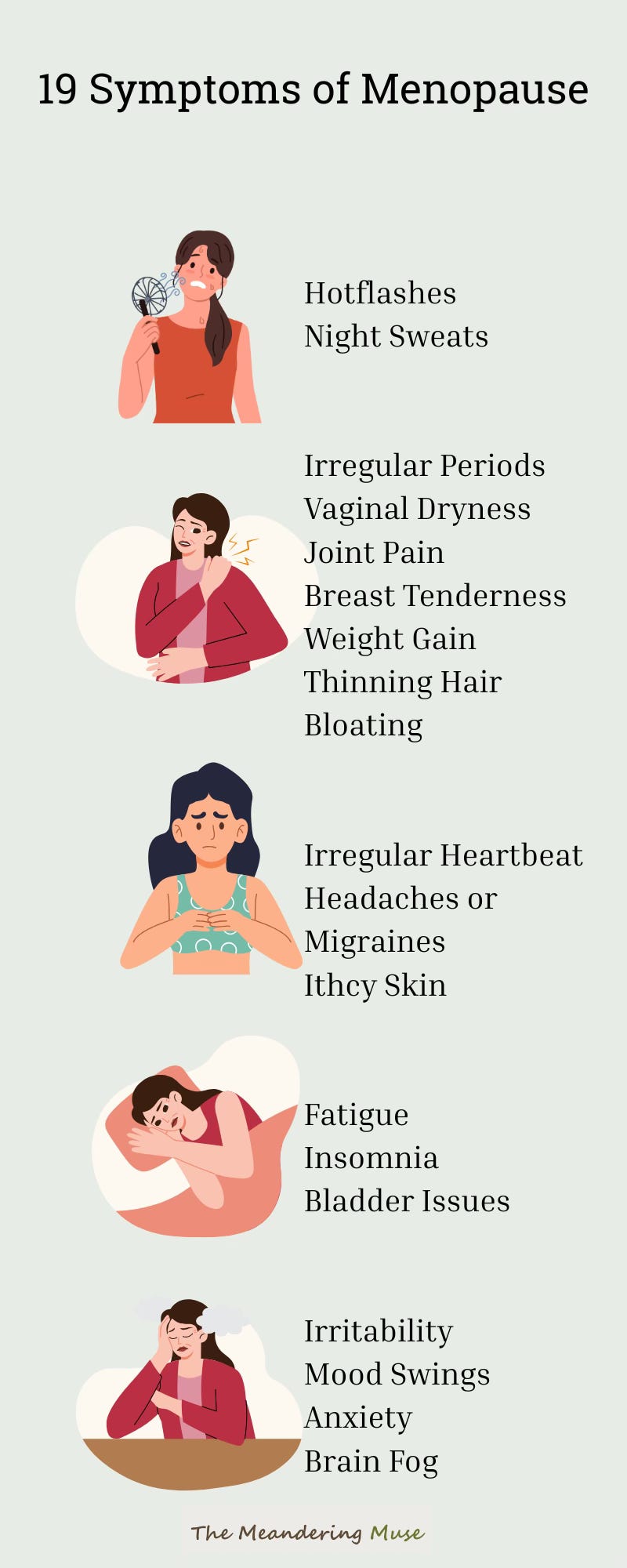
So, what to do with all of this information is to start to take control of the situation? This is where mindset comes in, and we will discuss more of that later. For me, and for the first time in my life, I began to track symptoms. The main reason that I did this is that I started getting periodic, distressing, optical migraines, which I thought were stress-related. However, as I began tracking when I got them, I realized that they were related to the time in my cycle when estrogen dropped the most rapidly.

Next week, we will discuss tips for reclaiming ourselves. My challenge to you this week is to create a calendar, digital or analog, where you can track your symptoms. This is the first step we can take to proactively begin to understand how this season is affecting our individual bodies. Also, I would recommend picking up a book titled The Upgrade: How the Female Brain Gets Stronger and Better in Midlife and Beyond. It is a fantastic resource!
Here is a Sample Symptom Tracker based on how I track, just for you ✨

If you missed the first post in the series, you can find it here:

Until next time,

As an Amazon Associate I earn from qualifying purchases
Hello friend! My name is Amy. I am so happy you have stopped by ✨ If you are new here, a warm welcome to you! This space is where I meander through midlife, connecting to my true self through the seasonal shifts and simpler living, and seeking my inner wise woman. If you are also on this path and looking for someone to walk gently beside you, I see you and am here. Let’s color outside the lines together.